Best Practices for Roadside Emergency Safety

Last Updated: November 2, 2026
Quick Summary
The best practices for roadside emergency safety are to get off the travel lane, get visible, and get help. Steer to the right shoulder, turn on hazard lights immediately, then put the vehicle in park, set the parking brake, and shut off the engine before calling for assistance.
Turn on hazard lights the moment the vehicle slows unexpectedly, before drivers behind can see why.
Exit on the passenger side and wait behind a barrier if the vehicle is in a live lane.
On a visible shoulder with no immediate hazard, stay belted inside with hazards on.
Never stand between your vehicle and oncoming traffic or at the rear waving traffic around.
Tell dispatch your exact location, direction of travel, vehicle make and model, and any hazards.
Table of Contents
What to Do When Your Car Breaks Down
A roadside emergency is any unplanned vehicle failure or incident that leaves you stopped on or beside a public road. Knowing the best practices for roadside emergency safety starts with one principle: get off the travel lane, get visible, and get help.
Here is the sequence that matters, in order:
Keep control of the vehicle and steer toward the right shoulder.
Turn on your hazard lights immediately.
Put the vehicle in park, set the parking brake, and shut off the engine.
Assess the situation calmly before anyone moves.
Call for roadside assistance or emergency services, depending on the risk.
What most guides miss is the order of operations. A disabled car in a live lane is a hazard to every vehicle behind it, and the few seconds it takes to signal and steer clear are worth taking before reaching for the phone.
Pulling Over Safely and Choosing a Safe Location
The safest location for a broken-down vehicle is the right shoulder, as far from the travel lane as the surface allows, on a straight section with clear sightlines. If you can roll to a parking lot, a driveway, or an exit ramp, take it.
A common mistake is stopping just past a curve or a crest where approaching drivers cannot see you until the last moment. If the vehicle still moves, put it somewhere visible.
Hazard Lights, Visibility, and Warning Signals
Hazard lights are your first warning signal and should go on the moment the vehicle slows unexpectedly. They tell every driver behind you that something is wrong before they can see why.
Beyond the flashers, visibility comes down to three things:
Reflective vest: put one on before you step out of the car, not after.
Warning triangle: set it out only when it is safe to walk, and never on a busy highway shoulder.
Flashlight: essential after dark, both to see and to be seen.
Watch out: stepping out to place a warning triangle on a high-speed shoulder can be dangerous.
Here is the sequence to follow when your vehicle breaks down, in order.
Step | What to do |
1 | Keep control and steer toward the right shoulder |
2 | Turn on hazard lights immediately |
3 | Put in park, set parking brake, shut off engine |
4 | Assess the situation calmly before anyone moves |
5 | Call roadside assistance or emergency services |
Should You Stay in the Vehicle or Get Out?
This is where most roadside advice contradicts itself. Some guides say never leave the car; others say get out and move away.
Question 1: Is the vehicle in a live lane or in the path of traffic? If yes, get out, and exit on the side away from traffic.
Question 3: If neither applies, can you wait safely inside? On a wide shoulder with clear sightlines and hazards on, yes.
A simple way to hold it in your head:
In a live lane → out. Exit passenger side, move behind a barrier.
Smoke, fuel, or fire → out and away. Put distance between you and the vehicle.
On a shoulder, visible, no immediate hazard → stay in, belted, hazards on.
Watch Out Never stand between your vehicle and oncoming traffic, and never stand at the rear of the car to wave traffic around. That position is where stranded motorists are most often struck.
Highways, Narrow Shoulders, Tunnels, and Bridges
Situation-specific judgment matters more than any general rule, because the safe answer changes with the road environment.
Highways and narrow shoulders. Exit on the passenger side, away from traffic, and wait behind the barrier.
Tunnels. Hazards on, engine off, and call for help immediately.
Rural roads and crests. A disabled car just past a curve or crest is invisible until the last moment.
Key Takeaway The decision is not "stay or go" in the abstract. It is: live lane or immediate hazard means out and behind a barrier; a visible shoulder with no hazard means stay belted inside. When in doubt, choose the barrier.
How to Stay Safe While Waiting for a Tow Truck
Waiting safely comes down to visibility and position: stay behind a barrier if one exists, keep your hazards on, and stay off the road.

A few habits keep the wait safe:
Keep your phone charged so you can stay in contact with the operator.
Leave the keys accessible but stay out of the driver's seat if you are behind a barrier.
Do not accept help from unmarked vehicles offering a tow. Use the operator you called.
If you want a realistic sense of how long help takes, our guide on emergency towing response time explains what affects arrival windows.
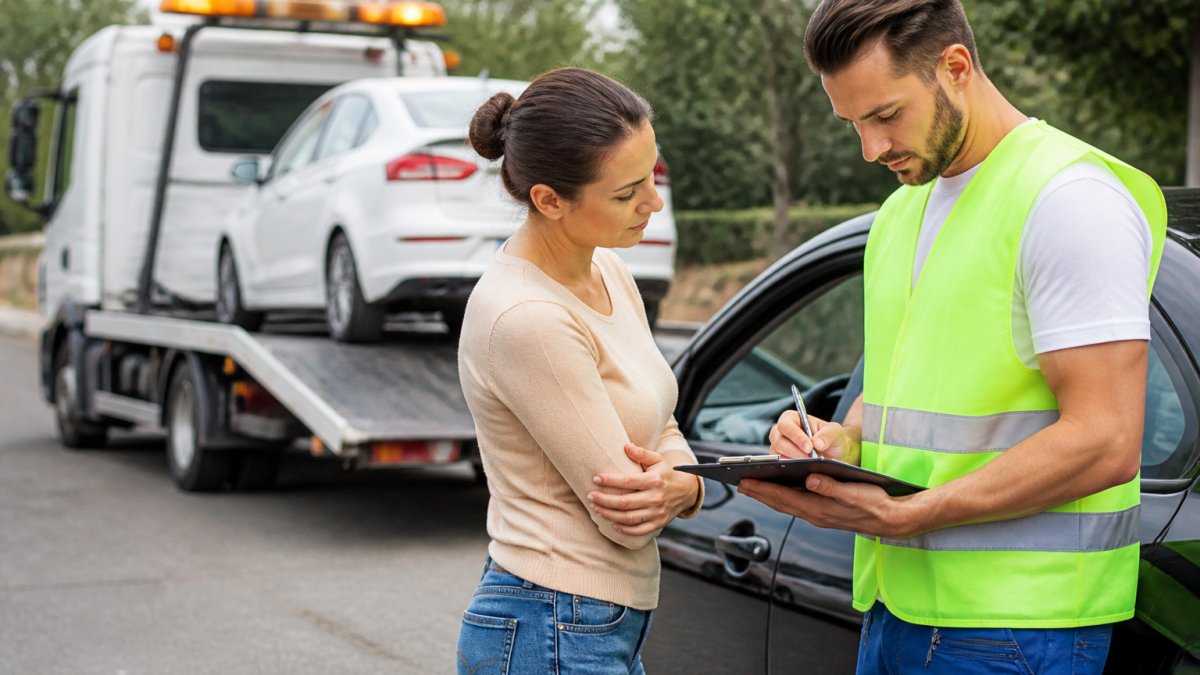
What to Tell Dispatch or Roadside Assistance
Giving dispatch the following details helps the operator locate you and plan the response: your exact location, the direction you were traveling, the vehicle make and model, what went wrong, and whether anyone is in danger. You can also book emergency roadside assistance online once you have those details ready.
Mention hazards specifically: a car stopped in a live lane or a vehicle with smoke showing gets prioritized. Tell them about passengers, children, older adults, and pets so the right equipment comes out.
Roadside Emergency Kit Checklist
A practical roadside emergency kit is the cheapest safety upgrade you can make. Build it once and check it twice a year, at the same time you change your tires or test your smoke alarms.
Reflective vest, one per occupant
Warning triangle or road flares
Working flashlight with spare batteries
A reflective vest is one of the simplest items to carry, and it makes you visible to drivers at highway speed at dusk.
What to Do After a Car Accident
After a collision, your priority is safety, not paperwork: move to a safe location if the vehicles can be moved, check for injuries, and call 911 if anyone is hurt. In Ontario, drivers are legally required to report a collision to police when damage exceeds the provincial threshold or when anyone is injured, so call rather than guess (Dealing with emergencies | The Official Ministry of Transportation (MTO) Driver’s Handbook).
Then, in order:
Turn on hazards and get everyone behind a barrier if possible.
Call 911 if there are injuries, or police for a reportable collision.
Exchange information: names, contact details, insurance, plate numbers.
Photograph the scene, the damage, and the road conditions.
Call for a tow and tell dispatch it is an accident recovery, not a breakdown.
For a fuller walkthrough, read our emergency accident recovery steps.
Passengers, Children, Older Adults, and Pets
Passengers change the plan. Children and pets should be moved behind a barrier and kept close, never left in a vehicle stopped in a risky spot. Older adults and anyone with mobility limitations may not be able to climb a guardrail, so tell dispatch before the truck arrives; operators deal with this regularly and can plan for it. Keep pets leashed or crated, and never let a pet loose on a highway shoulder.
Severe Weather, Darkness, and Extreme Temperatures
Bad conditions raise the stakes. In darkness, visibility drops and your hazards and vest do more work.
In winter, keeping the fuel tank well stocked is a sensible habit, since a car that runs out of fuel in a blizzard can become a shelter problem. If you are stuck in severe weather, run the engine intermittently for warmth, clear snow from the exhaust, and keep a window cracked for airflow.
What to Do When Your Vehicle Breaks Down: Getting Help from SJ's Towing
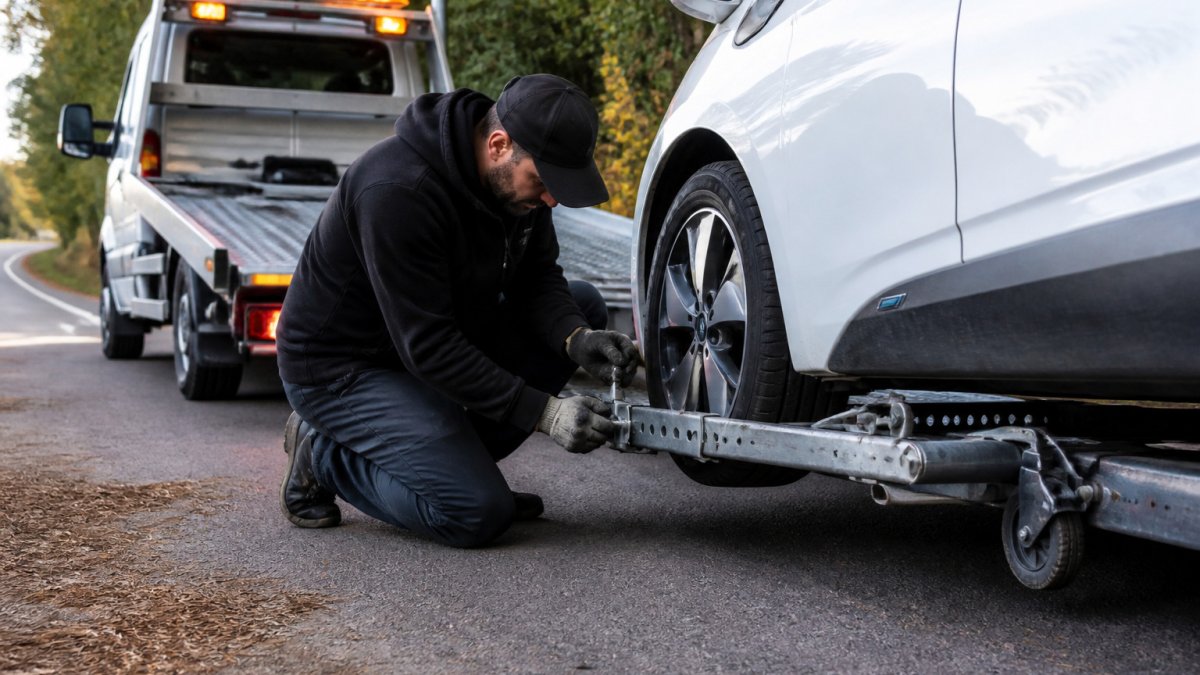
When the breakdown happens, the safest move is to get help from an operator who will actually show up and treat your vehicle with care.
One customer put it simply after a breakdown: "David was a great help by taking extra care of my car.
You can see the full range of towing services in Hamilton and Burlington, or get a quote and have your details ready.
Frequently Asked Questions
What should you do first during a roadside emergency?
Get the vehicle as far off the road as you can, then turn on your hazard lights before doing anything else. Shift into park, set the parking brake, and keep your seatbelt on until you have checked traffic. On a highway, angle the wheels away from the road so the car rolls away from traffic if it is hit. Only after the car is stationary and visible should you call for roadside assistance and decide whether to stay inside or step out behind a barrier.
Where is the safest place to wait if your vehicle breaks down?
The safest place is behind a solid barrier, well away from the traffic lane, or inside the vehicle with seatbelts fastened if no barrier exists. Never stand between your car and oncoming traffic, and never wait in front of the hood. On a narrow shoulder with no guardrail, staying buckled inside with hazard lights on is usually safer than standing outside. If you can safely reach a guardrail, stand behind it and keep your phone on you.
What should a roadside emergency kit checklist include?
A practical roadside emergency kit checklist covers visibility, communication, and basic repairs: a reflective vest, warning triangle, flashlight with spare batteries, a charged power bank, jumper cables or a booster pack, a spare tire with a working jack and lug wrench, first-aid kit, drinking water, nonperishable food, a small shovel, tow rope, fire extinguisher, and a warm blanket. In colder months, add gloves, a hat, and an extra phone charger. Check the kit twice a year and replace expired items.
How do you make your vehicle visible to other drivers after a breakdown?
Turn on your hazard lights immediately and, at night, leave your parking lights on if it is safe. Set a warning triangle behind the vehicle on the shoulder if traffic allows, and put on a reflective vest before stepping out. Keep headlights on if visibility is poor. On a highway, do not walk into the traffic lane to place a triangle; if the shoulder is narrow, stay in the car with hazards flashing and let the tow operator handle the scene.
When should you call roadside assistance after a breakdown?
Call roadside assistance as soon as the vehicle is safely stopped and visible, especially on a highway, at night, or in extreme weather. If anyone is injured, call emergency services first. When you call, give your exact location using highway markers, exit numbers, or a navigation pin, describe the vehicle, and say whether you are in a live lane. SJ's Towing is available 24/7 across Hamilton, Burlington, Grimsby, Brantford, Oakville, and surrounding areas.
Should you stay inside your vehicle during a roadside emergency?
Stay inside with your seatbelt on when there is no safe barrier and traffic is moving fast, because the vehicle offers more protection than standing on a narrow shoulder. Get out only if you can move well away from traffic, such as behind a guardrail, or if the car is at risk of fire or further collision. If you do exit, put on a reflective vest, exit on the side away from traffic, and keep children and pets with you behind the barrier.
What should you tell dispatch or roadside assistance when you call?
Give the dispatcher your exact location first: highway number, direction of travel, nearest exit or kilometre marker, and a navigation pin if you have one. Then describe the vehicle by make, model, colour, and plate, and say what went wrong. Mention whether you are in a live lane or on the shoulder, how many passengers are with you, and whether anyone is injured.
What should you do after a car accident on a busy road?
Move vehicles off the road if they are drivable and it is safe, then turn on hazard lights and check for injuries. Call emergency services if anyone is hurt, and call police for collisions involving injury or significant damage. Exchange insurance and contact details only from a safe spot behind a barrier. Do not stand between the vehicles. Once the scene is secure, arrange accident recovery with a towing service.
The next time your vehicle quits on you, the difference between a stressful hour and a dangerous one comes down to preparation and a fast, reliable operator. SJ's Towing offers 24/7 availability, on-time response, and friendly, professional drivers who treat every vehicle like their own. Get started with SJ's Towing and get off the shoulder safely.
Comments