Book Emergency Roadside Assistance Online Now

Table of Contents
Book Emergency Roadside Assistance Online Now: What You Need
Information to Have Ready Before You Submit
How to Request a Tow Truck Online in Four Steps
What Happens After You Submit Your Request
How Long Does Roadside Assistance Take?
24/7 Emergency Towing: What to Expect at 2 AM
The Stranded-Driver Safety Protocol (Do This in Order)
What Changes Overnight
Flat Tire Roadside Assistance and Other Services You Can Book
Pricing, Insurance, and What to Do While You Wait
What Actually Drives the Price
Does Your Insurance or Credit Card Cover It?
Why ETA Transparency Matters
DIY vs. Professional Help
Conclusion
Frequently Asked Questions
Last Updated: October 9, 2026
Book Emergency Roadside Assistance Online Now: What You Need
Booking emergency roadside assistance online takes about two minutes and beats waiting on hold. At SJ's Towing, a family-run service covering Hamilton, Burlington, Grimsby, Brantford, and Oakville, we built our booking process around one idea: the less you have to type while sitting on a shoulder, the better.

Here's the part most guides get wrong. They tell you to call first and figure out the details later. In practice, the drivers who get help fastest are the ones who had their information ready before anything went wrong.
Information to Have Ready Before You Submit
Gather five details before you start the form: your exact location, vehicle make and model, the problem, your contact number, and your payment or insurance information. Having these ready cuts the booking time in half.
Location: The nearest cross street, highway exit number, or a dropped pin. On a 400-series highway, name the direction of travel.
Vehicle details: Make, model, colour, and licence plate. This helps the dispatcher send the right truck.
The problem: Dead battery, flat tire, lockout, out of fuel, or a collision. Be specific.
A common mistake is submitting a request without a precise location. "Somewhere on the QEW" costs the dispatcher time, and that time is yours.
How to Request a Tow Truck Online in Four Steps
Requesting a tow truck online follows four steps: enter your location, describe the problem, confirm your vehicle and contact details, then submit and wait for a confirmation with an estimated arrival time. The whole process usually takes two to three minutes.
Open the booking form on your provider's website and enter your location. Use the pin-drop tool if your phone's GPS is reliable.
Select your service type. Choose towing, a battery jump start, flat tire replacement, fuel delivery, or lockout assistance from the menu.
Add your vehicle and contact details. Include the make, model, and plate so the right equipment gets dispatched.
Submit and watch for confirmation. You should receive a text or email with your reference number and an estimated arrival window.
What Happens After You Submit Your Request
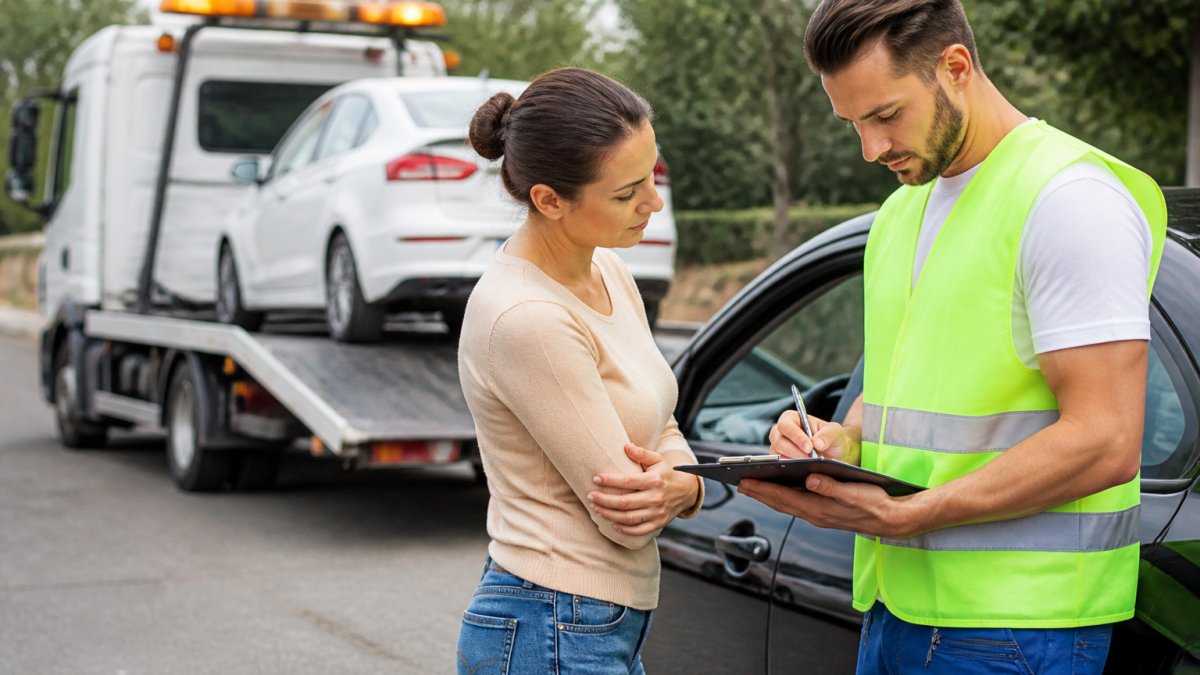
Your request goes to a dispatcher who assigns the nearest available truck and sends you a confirmation with an estimated arrival time. From there, the roadside technician heads your way, and you can track progress by phone or text.
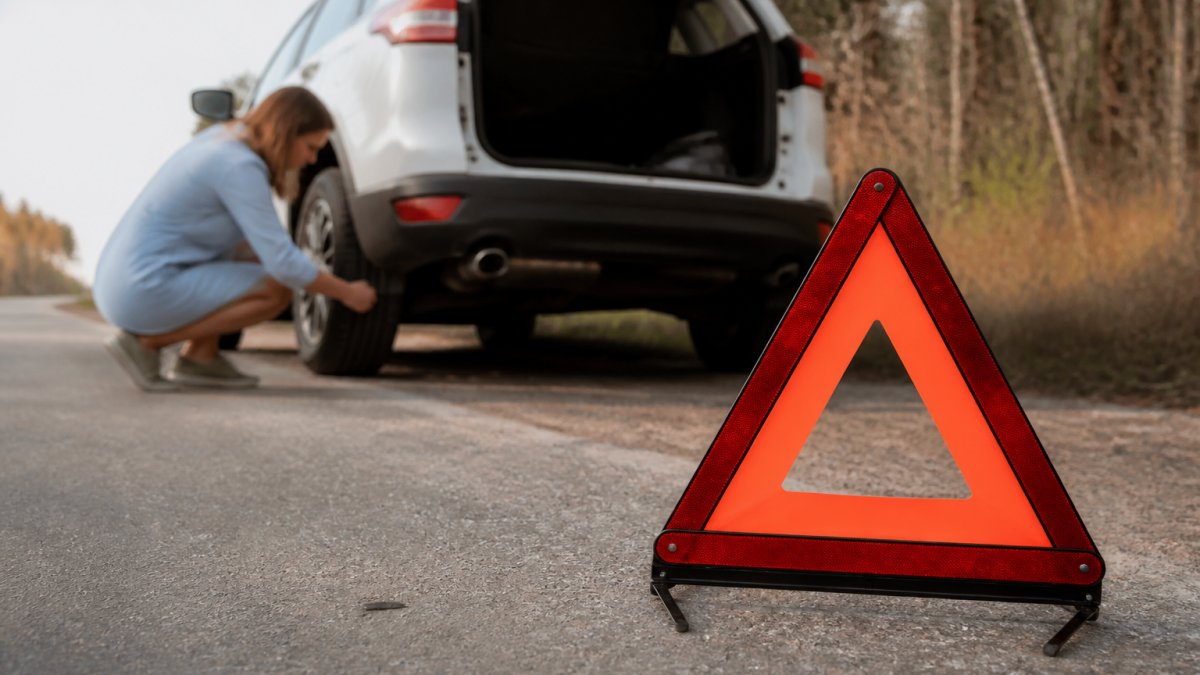
Stay in your vehicle with your seatbelt on if you're on a highway shoulder, and keep your hazard lights on. If you're on a quiet road and it's safe, standing well away from traffic is an option.
How Long Does Roadside Assistance Take?
Most urban and highway-corridor calls are reached within a window the dispatcher confirms when you book, though traffic, weather, and demand all affect the actual time.
That transparency matters because the biggest fear drivers have is being forgotten. If a company quotes you a time on the phone and then goes quiet, that's a red flag. Ask for a reference number and a text confirmation.
Watch Out Never assume a quoted arrival time is guaranteed. Weather events and multi-vehicle collisions can push back every truck in a region. If your estimate passes without an update, call the dispatcher for a revised window rather than waiting in silence.
24/7 Emergency Towing: What to Expect at 2 AM
A genuine 24/7 emergency towing service runs the same process at 2 AM as it does at 2 PM: a live dispatcher, an assigned truck, and a confirmation with an arrival estimate. The difference is that overnight demand is lower, so trucks are often freed up faster. That said, the risk profile changes after dark, and most guides skip the part that actually keeps you safe.
The Stranded-Driver Safety Protocol (Do This in Order)
Most roadside injuries happen to people standing outside their vehicle, not to people inside it. Work through these steps in sequence while you wait for the truck.
Get off the travel lane if you can. If the vehicle still rolls, steer onto the right shoulder, an emergency pull-out, or the nearest exit ramp. On a 400-series highway, the right shoulder is the default; never stop in a live lane or on a curve where you can't be seen.
Set the parking brake and turn the wheels away from traffic. If you're on a slope or a soft shoulder, angling the front wheels toward the ditch reduces the chance of rolling into the lane if you're bumped.
Turn on your hazard lights immediately. Four-way flashers are the single most effective visibility tool you have, and they're required equipment on every vehicle sold in the country.
Raise the hood or tie something bright to the door handle. A raised hood is a universal signal that a vehicle is disabled, not parked.
Exit from the side away from traffic if you must get out, and only if it's safe. Move to the far side of a guardrail or up a slope, never between your car and oncoming traffic.
Stay buckled in with your seatbelt on if you're on a highway shoulder and can't safely reach a barrier. A parked car on a shoulder is still a target; the seatbelt is your best protection if it's struck.
Call or submit your booking, then stay off the phone except to confirm the truck's arrival. Keep the line free for the dispatcher.
What Changes Overnight
The risk at 2 AM isn't the tow itself, it's visibility. A dark vehicle on an unlit shoulder is hard to see, and impaired or fatigued drivers are more common in the small hours.
For small business owners running light commercial vans or service vehicles, a 2 AM breakdown before a morning route is a real problem. Booking online the moment it happens, rather than waiting until sunrise, gets you back on schedule.
Watch Out Never stand between your vehicle and oncoming traffic, and never attempt a tire change on the traffic side of a highway shoulder at night. If you can't reach a safe spot, stay in the vehicle with your seatbelt on and let the technician handle it.
Flat Tire Roadside Assistance and Other Services You Can Book
Flat tire roadside assistance is one of the most common online bookings, but it's far from the only service available. Most providers let you select from a full menu when you submit your request.
Service | What It Covers | When to Book It |
Flat tire change | Swapping to your spare | You have a usable spare |
Battery boost | Jump start for a dead battery | Lights dim, engine won't turn |
Lockout assistance | Unlocking without damage | Keys locked inside |
Fuel delivery | Bringing fuel to your location | You ran out of gas |
Accident recovery | Towing after a collision | Vehicle isn't drivable |
Long-distance towing | Transport to a chosen shop | Repair needed elsewhere |
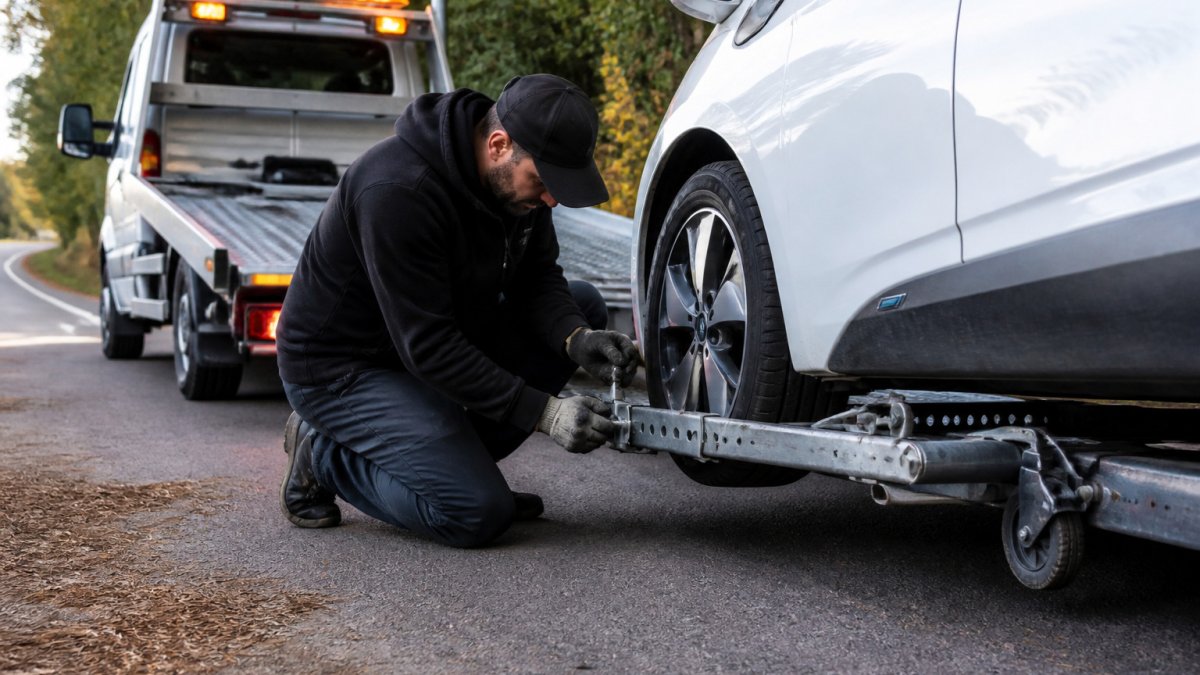
If your tire is shredded or you don't have a spare, a flat tire replacement call becomes a tow instead. Tell the dispatcher which situation applies so the right truck is sent.
Pricing, Insurance, and What to Do While You Wait
Pricing for roadside assistance depends on the service, distance, and time of day, so ask for a quote before you confirm the booking. A reputable provider gives you the rate up front, with no surprise charges when the truck arrives. This is where drivers get burned: a quote given over the phone that balloons on arrival is the single most common complaint in this industry.
What Actually Drives the Price
Four variables move the number more than anything else:
Service type. A battery boost or fuel delivery is usually the cheapest call; a flat tire change sits in the middle; a tow is the most expensive because it involves distance and equipment.
Distance. Towing is typically billed from the hook-up point to the drop-off, so a short hop to a nearby shop costs less than a long-distance haul.
Time of day. Overnight, weekend, and holiday calls often carry a premium because dispatch and technician costs are higher.
Ask the dispatcher to confirm whether the quote includes the hook-up fee, the per-kilometre rate, and any after-hours surcharge. Those three line items are where surprises hide.
Does Your Insurance or Credit Card Cover It?
This is the question most drivers don't ask until after they've paid. In many provinces, auto insurance is sold through private insurers, while in others it's delivered through a public plan, and roadside coverage is usually an optional add-on rather than a standard inclusion (Mandatory auto coverages where you live). That means the answer depends on your specific policy, not on a general rule.
A practical checklist before you pay out of pocket:
Read your policy's roadside endorsement. Look for terms like 'roadside assistance,' 'towing,' or 'emergency service' in your coverage documents, or call your insurer's claims line and ask directly.
Check your credit card benefits guide. Many premium cards bundle roadside assistance as a cardholder benefit, but the coverage usually has a per-incident cap and a distance limit, and you often must call the card's designated dispatch number rather than any provider.
Check a manufacturer or membership program. New-vehicle warranties sometimes include roadside coverage for a set period, and auto clubs sell standalone memberships.
Keep every receipt. If you pay out of pocket and later find you were covered, most insurers and card programs require an itemized receipt and a description of the service to reimburse you.
Pro Tip Before you book, ask two questions: 'What's the all-in price, including after-hours and per-kilometre charges?' and 'Will I get a text confirmation with a reference number and an arrival window?' A provider that answers both clearly is one you can trust with your vehicle.
Why ETA Transparency Matters
An estimated arrival time is exactly that: an estimate. Traffic, weather, and the number of simultaneous calls all move it. A transparent provider gives you a window up front and updates you if it changes, rather than going quiet. If your window passes without an update, call the dispatcher for a revised estimate instead of waiting in silence. Ask for a reference number and a text confirmation so you have something to point to if the truck is late.
DIY vs. Professional Help
Changing your own tire is fine on a quiet residential street in daylight with a good spare and the right tools. It's a bad idea on a highway shoulder, in the dark, or in heavy rain.
Do it yourself if: you're in a safe, well-lit spot, you have a proper jack and a fully inflated spare, and you know how to use them.
Call a professional if: you're on a highway, the weather is poor, you're unsure of the process, or your vehicle has no spare.
The math is simple. A few minutes of professional help is worth far more than the risk of a roadside injury. Professional towing and roadside support exists for exactly this reason.
Conclusion
A breakdown is stressful enough without wondering whether help will actually show. The fix is to book through a provider that confirms your request, quotes you a rate, and gives you a real arrival estimate. SJ's Towing offers 24/7 dispatch, family-run service, and affordable pricing across Hamilton, Burlington, Grimsby, Brantford, Oakville, and the surrounding areas. Get a quote from SJ's Towing and get back on the road with a team that shows up on time and treats your vehicle with care.
Frequently Asked Questions
How do I book emergency roadside assistance online?
Open the provider's website or app and submit a request form with your location, vehicle details, and the problem you're facing. You'll get a confirmation with an estimated arrival time. Keep your phone on and hazard lights running. SJ's Towing accepts online bookings 24/7 across Hamilton, Burlington, Oakville, Grimsby, and Brantford.
What information do I need to request a tow online?
Have your exact location ready (a pin drop or cross streets), your vehicle's make, model, and colour, your licence plate, and a short description of the issue. Note whether the vehicle is in a safe spot or blocking traffic. This helps dispatch send the right truck and give you an accurate arrival window.
How long does roadside assistance take to arrive?
Arrival time depends on your location, traffic, and how many calls are active. Urban areas like Hamilton and Burlington often see faster response than rural routes near Grimsby. Reputable providers give you an estimated arrival window when you book and update you if it changes. Ask for that estimate upfront so you're not left guessing.
Does insurance cover emergency roadside assistance?
Many Canadian auto insurance policies offer roadside assistance as an optional add-on, and some credit cards or manufacturer warranties include it. Check your policy or call your insurer before you book to see if you can claim the cost back. Even without coverage, most providers offer quotes before dispatch so there are no surprises.
GET A QUOTE
header.all-comments