Emergency Roadside Assistance for Brantford Drivers

Table of Contents
What to Do When Your Car Breaks Down: First Steps
Pull Over and Get Visible
What to Tell the Dispatcher
Roadside Breakdown Safety Tips While You Wait
Should You Stay in the Vehicle?
When to Call 911
Emergency Towing in Brantford: Coverage and Response
What Local Coverage Usually Means
Response Expectations by Location
Emergency Roadside Assistance for Brantford Drivers: What's Covered
Battery Boosts and Jump-Starts
Flat Tires and Lockouts
Roadside Assistance Pricing and Payment in Ontario
What to Confirm Before Dispatch
Payment at the Roadside
Using Existing Coverage First
Build a Winter Car Emergency Kit
Frequently Asked Questions
Last Updated: October 19, 2026
What to Do When Your Car Breaks Down: First Steps
A breakdown rarely announces itself. One minute you're merging onto Highway 403, the next there's a warning light, a shudder, and a steering wheel that feels wrong. What you do in the next sixty seconds matters more than anything else that happens that day. At SJ's Towing, we know that calm, deliberate drivers get through this far better than panicked ones. Below, we'll walk you through exactly what to do, what to tell the dispatcher, and how to stay safe until help arrives.
The first rule of emergency roadside assistance for Brantford drivers is simple: get off the live lane before you do anything else.
Pull Over and Get Visible
Signal early, ease onto the right shoulder, and put as much distance between your vehicle and moving traffic as the shoulder allows. If you can reach a parking lot, a side street, or an off-ramp, take it. A shoulder is a last resort, not a destination.
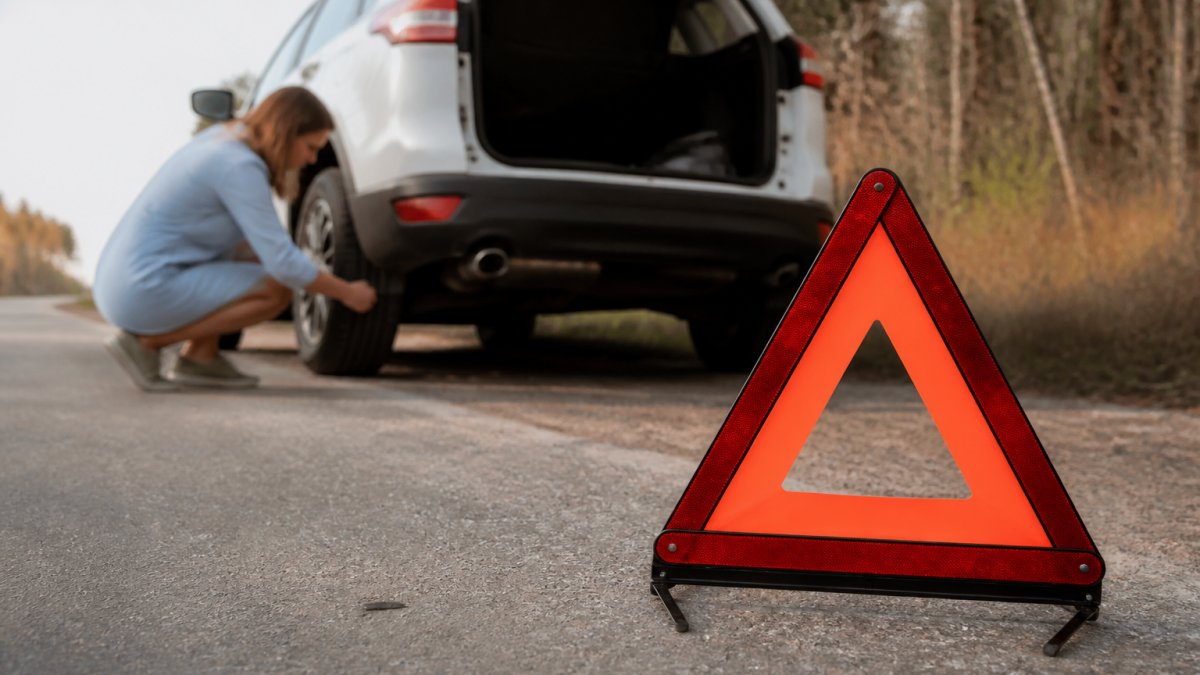
Once stopped, hazard lights go on immediately. If it's dark or visibility is poor, turn on your interior dome light so approaching drivers can see a person is inside. Straighten your wheels away from traffic in case the vehicle rolls.
What to Tell the Dispatcher
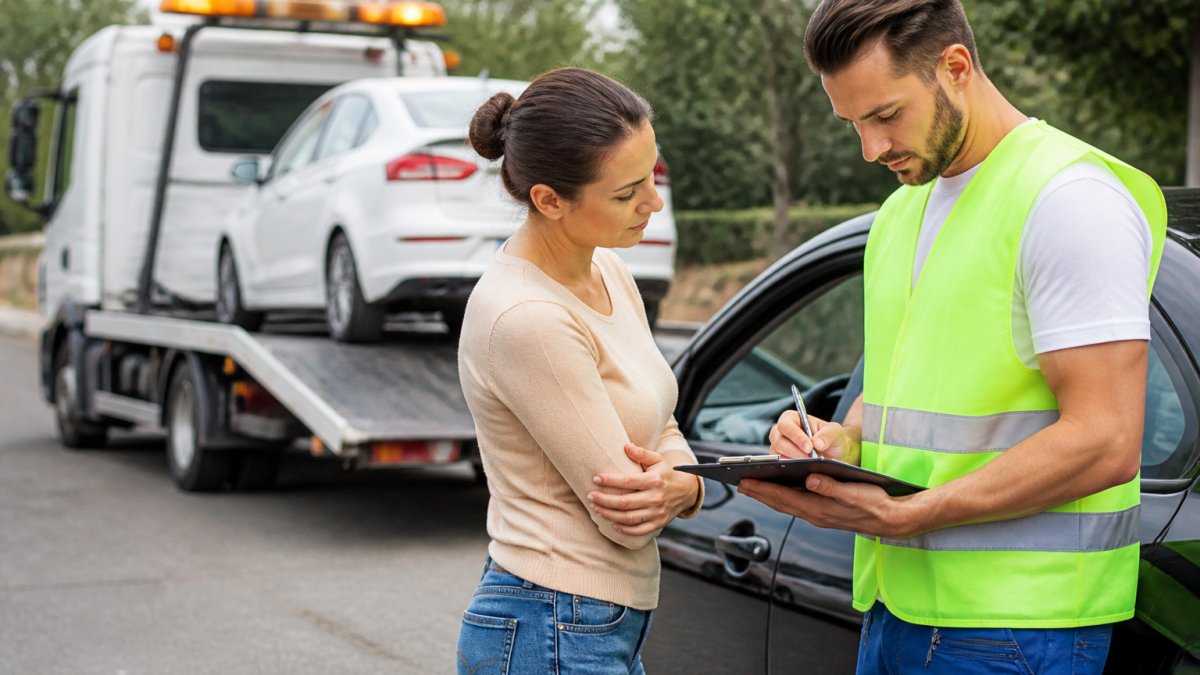
When you call for assistance, the dispatcher needs four things: your exact location, your vehicle's make, model, and colour, the nature of the problem, and whether anyone is injured. Read the nearest highway exit sign or kilometre marker aloud. "Just past the Highway 403 and Wayne Gretzky Parkway area" is useful; "somewhere near Brantford" is not.
Mention if you're in a vulnerable spot, such as a blind curve or a narrow shoulder. That changes how the tow truck operator approaches the scene. If you're travelling with children or pets, say so.
Roadside Breakdown Safety Tips While You Wait

Waiting is the most dangerous part of a breakdown, and it's where roadside breakdown safety tips actually earn their keep. Most drivers do two things wrong: they stay in the car when they shouldn't, and they stand too close to traffic.
Should You Stay in the Vehicle?
Stay inside with your seatbelt fastened if you're on a quiet road, in bad weather, or if getting out would put you closer to traffic. Exit through the passenger side and move behind the guardrail if you're on a highway shoulder, a blind curve, or a high-speed road. Take your phone, your keys, and your emergency kit with you.
Never stand between your vehicle and oncoming traffic. Never attempt repairs on the traffic side of the car.
When to Call 911
Call 911 if anyone is injured, if your vehicle is blocking a live lane, if you smell fuel or see smoke, or if another driver has struck your vehicle. A vehicle stopped in a live lane on a highway is an emergency, not an inconvenience. For everything else, a roadside assistance provider is the right call.
Watch Out Standing behind your car while waiting for a tow is one of the most common mistakes drivers make. A rear-end collision on a shoulder can push the vehicle into you. Move to the far side of the guardrail and stay there until the operator signals you.
Emergency Towing in Brantford: Coverage and Response
Emergency towing in Brantford works best when you know the service area before you need it. A local operator covering Brantford and the surrounding areas can typically reach a highway breakdown faster than a company dispatching from outside the region. The practical question is not just "do you cover Brantford?" but "how far out do you go, and how long will it take on the day I call?"
What Local Coverage Usually Means
Coverage boundaries matter because a truck dispatched from outside the region may charge a longer towing distance or arrive later. When you call, confirm three things: whether your exact location is inside the provider's normal service area, whether there is a minimum charge or call-out fee to reach you, and whether the quoted price includes the tow distance or only the dispatch.
Response Expectations by Location
Response times depend on traffic, weather, and how many calls are already queued. On a clear day, a local truck may arrive quickly; during a winter storm or a collision on Highway 403, expect longer waits and plan accordingly. Ask the dispatcher whether your situation is being treated as an emergency or a standard call, and ask for an honest estimate rather than a guaranteed time.
If you are stranded on a rural road outside the city, tell the dispatcher the nearest intersection and the direction you were travelling. A provider who knows the area can often find you faster than one relying on a pin dropped on a map.
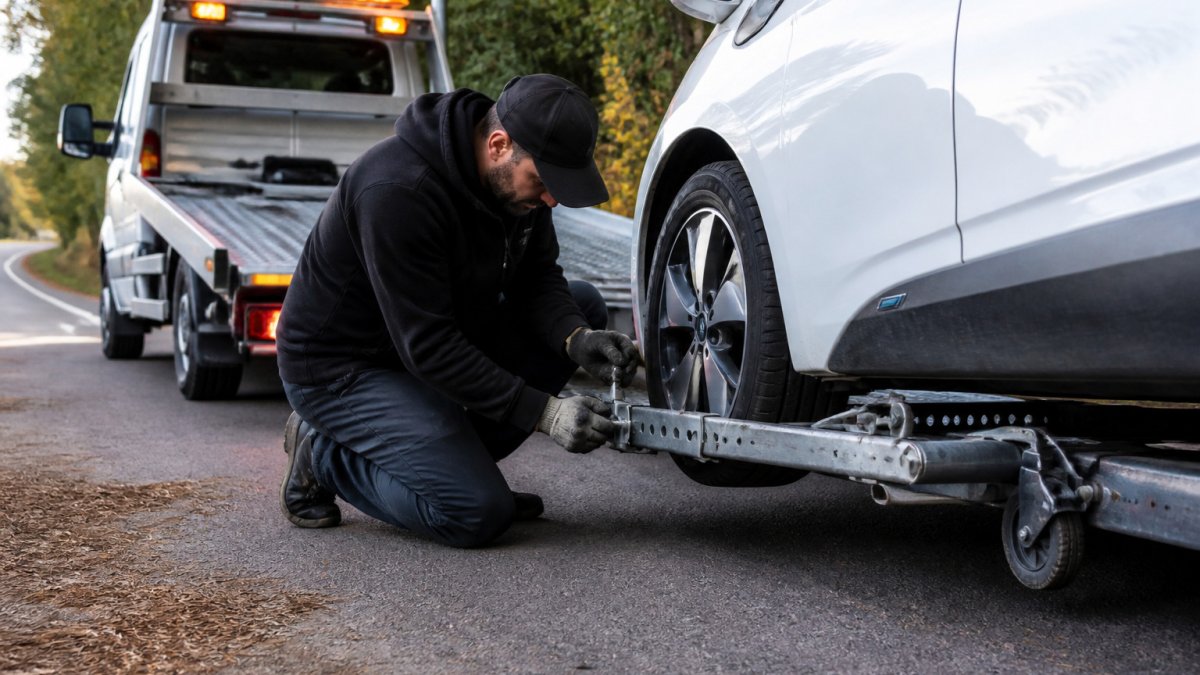
For a disabled company van or a light commercial vehicle, mention the vehicle type and whether it is loaded. That determines whether a flatbed is needed and whether the provider has the right equipment in the area.
Pro Tip Save a local provider's number in your phone before you need it. Searching for a tow company on a dark shoulder with traffic passing at highway speed is far harder than it sounds.
Emergency Roadside Assistance for Brantford Drivers: What's Covered
Emergency roadside assistance for Brantford drivers usually covers more than towing. Most providers handle battery boosts, flat-tire changes, lockouts, and minor roadside repairs on the spot, which can get you moving without a tow at all.
Battery Boosts and Jump-Starts
A battery boost is the fastest fix for a car that won't crank. An operator arrives with a portable booster pack, connects it, and gets you started. If the battery won't hold a charge after a boost, the alternator or the battery itself is likely failing, and a tow to a garage is the sensible next step. In cold snaps, batteries fail more often, and a boost is often all that's needed.
Flat Tires and Lockouts
A flat tire can usually be swapped for your spare at the roadside, provided the spare is inflated and the wheel isn't seized. If you don't have a serviceable spare, the vehicle gets towed. For lockouts, a professional driver uses proper tools to open the door without damaging the seal or the window, which is why calling for car lockout service beats improvising with a coat hanger.
Situation | Typical First Response | When a Tow Is Needed |
Dead battery | Battery boost or jump-start | Battery won't hold charge |
Flat tire | Spare fitted at roadside | No serviceable spare |
Lockout | Non-damaging door opening | Keys locked inside a running vehicle |
Minor breakdown | Roadside repair attempt | Fault can't be fixed safely |
Collision | Recovery and transport | Vehicle not drivable |
Roadside Assistance Pricing and Payment in Ontario
Pricing for roadside assistance depends on the service, the distance towed, the time of day, and the vehicle type. A local operator should be able to give you a clear quote before dispatch. The gap most drivers fall into is not asking enough questions before they agree to the call-out.
What to Confirm Before Dispatch
Ask four questions when you call: What is the call-out fee, and does it apply even if the vehicle starts? Is the tow charged per kilometre or as a flat rate, and from what point does the distance count? Are there extra charges for after-hours service, weekends, or a flatbed? And what payment methods are accepted at the roadside?
If the operator says the vehicle needs a tow, ask where it will be taken and whether storage fees apply if the garage is closed.
Payment at the Roadside
Confirm before dispatch whether you need cash or whether a card is fine. If you are using insurance or an auto-club plan, ask whether the provider bills the plan directly or whether you pay and claim reimbursement. That difference matters when you are standing on a shoulder at night.
Using Existing Coverage First
If you carry auto-club coverage, manufacturer roadside assistance, or an insurance rider, call that provider first. Many policies cover towing to a nearby garage, and using it costs you nothing extra. Keep your policy number in the glovebox and confirm the provider's dispatch number before you need it. If your plan has a distance limit, ask the plan's dispatcher how far the tow is covered and what the overage rate is.
Key Takeaway The cheapest tow is the one you never needed. Ask whether a roadside fix is possible before agreeing to transport.
Build a Winter Car Emergency Kit
A winter car emergency kit turns a frightening breakdown into an inconvenient one. Pack it in autumn, before the first freeze, and check it once a month through the cold season.
Booster cables or a portable jump-starter
Foldable shovel and a bag of sand or grit for traction
Warm blanket, gloves, hat, and spare socks
Flashlight with fresh batteries
Reflective triangle or flares
Bottled water and non-perishable snacks
First-aid kit and any personal medication
Phone charger and a portable power bank
Ice scraper and a small snow brush
A printed card with your provider's number and your policy details
Keep the kit in the cabin, not the trunk. If you're locked out or the trunk release fails, a kit you can't reach is useless. For winter driving guidance, the Ontario Ministry of Transportation's winter driving advice is worth reading before the season starts.
A breakdown on a cold shoulder is stressful, but it doesn't have to be dangerous. The drivers who handle it best are the ones who pull over safely, call a local provider they trust, and stay behind the guardrail until help arrives. SJ's Towing is a family-run operation serving Brantford and the surrounding areas with 24/7 availability, fast on-time response, and honest, affordable rates. Our professional drivers treat every vehicle with care, from a simple battery boost to full accident recovery. Get a quote from SJ's Towing and get back on the road with confidence.
Frequently Asked Questions
How long does emergency roadside assistance usually take to arrive?
Arrival time depends on your location, traffic, and how busy the dispatch queue is. In town, a truck is often closer than you think; on rural stretches outside Brantford it takes longer. When you call, ask for an estimated arrival window and the dispatcher's name, then stay reachable on your phone. If you are on a highway shoulder, turn on your hazard lights and stay behind the guardrail while you wait so you are visible to approaching traffic.
Can roadside assistance help with a dead battery or flat tire?
Yes. A battery boost or jump-start is one of the most common calls, and a professional driver can usually get you running again without a tow. For a flat tire, a driver can swap on your spare if you have one and it is in usable condition; if the tire is damaged beyond a change or you have no spare, a tow to a tire shop is the next step. Lockouts are also handled on site in most cases.
What information should I give a roadside assistance provider?
Give your exact location first, including the highway, direction of travel, nearest exit or cross street, and any landmark. Then share your vehicle make, model, color, and plate, plus what went wrong (dead battery, flat tire, lockout, collision). Mention any passengers, pets, or hazards like a load spill. Confirm a callback number and ask for the estimated arrival window. Clear details help the dispatcher send the right truck the first time.
Should I stay in my vehicle while waiting for a tow truck?
On a quiet street with the car well off the roadway, staying inside with your seatbelt on is usually fine. On a highway shoulder, the safer choice is to exit on the passenger side, move behind the guardrail, and wait away from traffic. Keep your hazard lights on and your phone handy. If you must stay inside, keep your seatbelt fastened and watch your mirrors for approaching vehicles.
GET A QUOTE
Comments