Emergency Roadside Help in Grimsby Area: 24/7 Guide

Table of Contents
Emergency Roadside Help in Grimsby Area: What to Do First
Flat Tire Roadside Assistance: Fast Options in the Grimsby Area
Dead Battery Roadside Assistance: Jump-Start and Replacement
Roadside Assistance Response Time: What Affects How Fast Help Arrives
Compare Local Emergency Roadside Providers in the Grimsby Area
Emergency Pricing and Payment: What to Expect Before the Truck Arrives
Safety Steps While You Wait for Emergency Roadside Help
Frequently Asked Questions
Last Updated: October 12, 2026
Emergency Roadside Help in Grimsby Area: What to Do First
A vehicle breakdown rarely announces itself. One moment you're driving the QEW corridor between Hamilton and St. Catharines, and the next your dashboard lights up or your tire blows. Knowing where to turn for emergency roadside help in Grimsby area can turn a stressful hour into a manageable one.
At SJ's Towing, we've built our family-run operation around one promise: show up fast, charge fairly, and treat every vehicle like it's our own. This guide walks you through what to do first, which services exist, and how to compare local providers before you ever need one.
Emergency roadside help is the on-scene assistance a towing or service company provides when your vehicle becomes undrivable or unsafe, covering everything from flat tires and dead batteries to lockouts and accident recovery.
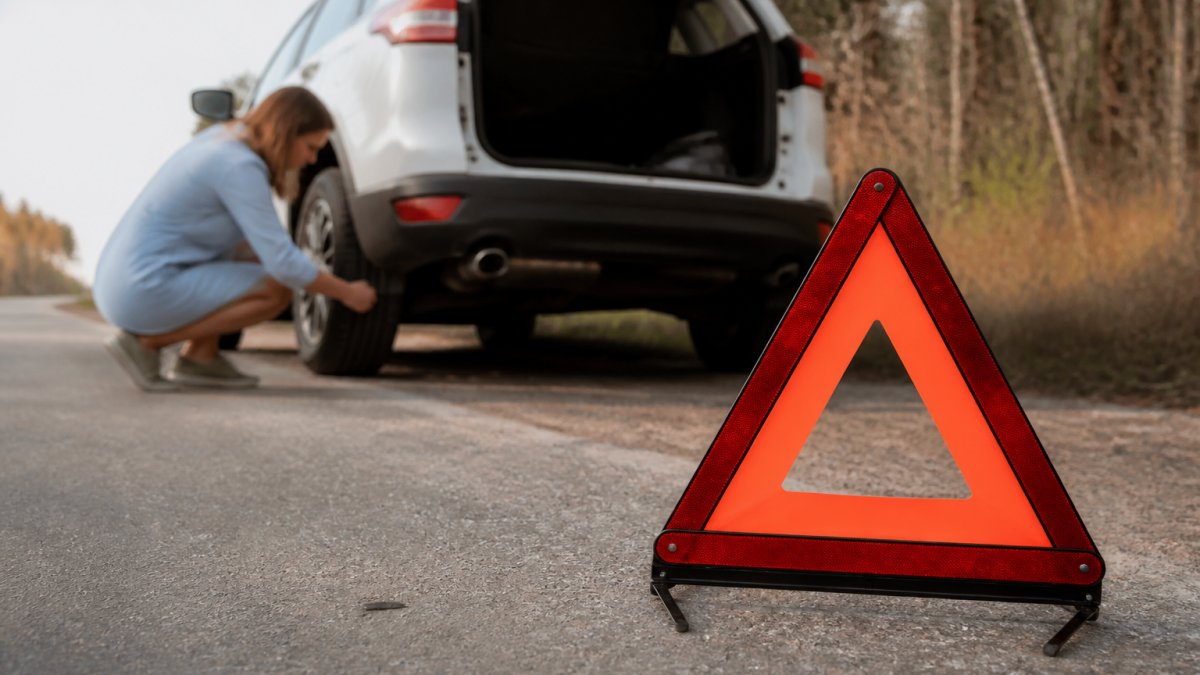
The first rule is simple: get yourself out of traffic before you worry about the car. Move to the shoulder if you can, turn on your hazard lights, and stay behind the barrier if there is one.
Watch Out Never stand between your vehicle and oncoming traffic while waiting. A common mistake is inspecting the damage from the traffic side of the car. Move to the passenger side or behind a guardrail first, then assess.
Flat Tire Roadside Assistance: Fast Options in the Grimsby Area
Flat tire roadside assistance splits into two outcomes, and knowing which one applies to you before you call saves time: a spare-tire swap on the shoulder, or a tow to a tire shop when there is no usable spare. Most local providers offer both, but they are dispatched differently, so tell the dispatcher which one you need.
When a spare-tire swap works on the spot
A mobile technician can usually mount your spare if all of the following are true:
You have a serviceable spare (not a compact "donut" that's already been used)
The wheel nuts aren't seized or stripped
You're parked somewhere a technician can safely work, a shoulder, a lot, or a quiet side street
The flat is on a standard passenger or light-truck wheel, not a split rim or commercial wheel
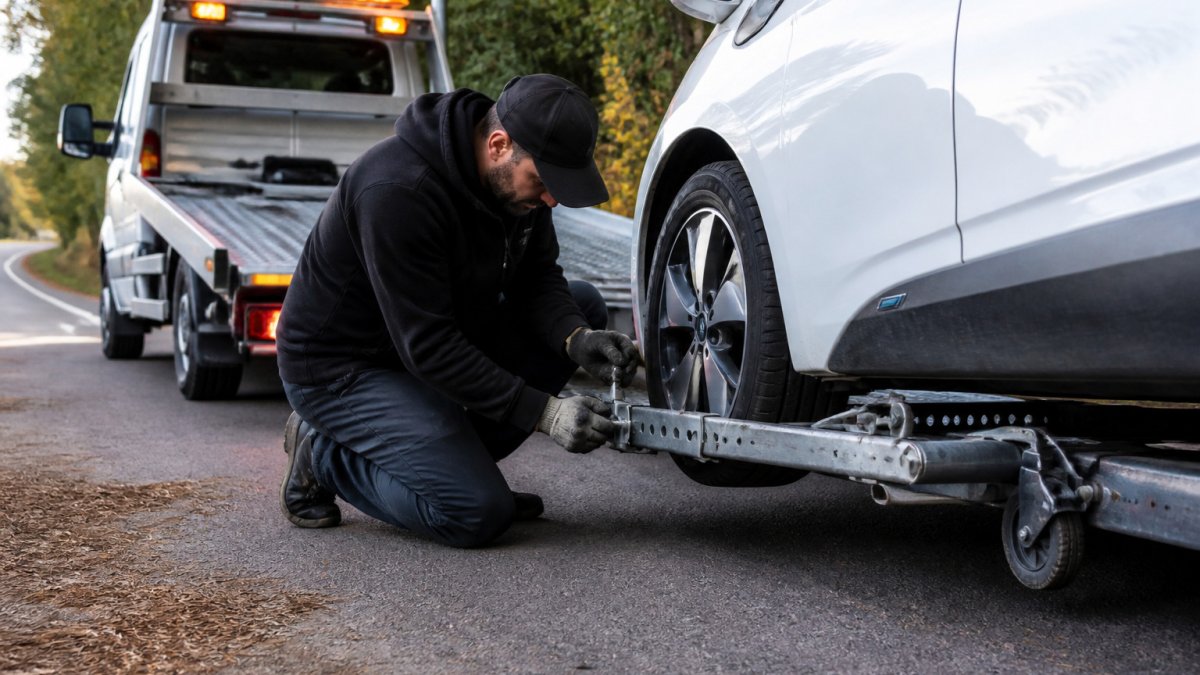
When you need a tow instead
Request a tow to a tire shop when any of these apply:
No spare, or the spare is flat or damaged
The tire is shredded, the rim is bent, or the sidewall is torn
You're on a live lane of the QEW or another 400-series highway where a shoulder swap isn't safe
The vehicle is a commercial van or truck with dual rear wheels
What to have ready when you call
Your exact location, including the nearest exit, kilometre marker, or landmark
Whether the flat is front or rear, a front flat affects steering, a rear flat affects stability
Whether you carry a spare, a jack, and a lug wrench
Your vehicle type, since light commercial vans and trucks need different lifting equipment than a sedan
The highway blowout scenario
A slow leak that becomes a full blowout at highway speed is the case most drivers fear. If it happens, hold the wheel firmly, ease off the accelerator, and let the vehicle slow before you steer toward the shoulder. Don't brake hard. Once stopped, angle your wheels away from traffic, set out a warning triangle if you have one, and stay clear of the vehicle until help arrives.
Why local matters for tire calls
For drivers in the Grimsby and Brantford area, mobile tire repair and tire sales are common requests.
Pro Tip If you're not sure whether your spare is usable, describe it to the dispatcher, "compact spare, never used" or "full-size, but I think it's flat too." That one detail determines whether a technician is sent to swap or a truck is sent to tow.
Dead Battery Roadside Assistance: Jump-Start and Replacement
Dead battery roadside assistance covers two outcomes: a jump-start that gets you moving again, or a battery replacement if the cell won't hold a charge. A jump-start is the quick option when you left a light on or the cold drained the battery overnight. A replacement is the honest answer when the battery is simply at the end of its life.
How do you tell the difference? If the engine cranks weakly or clicks once and dies, a boost usually works. If it's completely silent and the battery is several years old, plan for a replacement.
What most guides miss is that a jump-start only solves the symptom. If your battery dies twice in a week, the real problem is often the alternator or a parasitic drain, not the battery itself. Ask the technician to test the charging system before you drive away.
Pro Tip Keep a set of jumper cables and a portable jump pack in your trunk. A jump pack costs far less than a service call and can get you moving without waiting for a truck at all.
Roadside Assistance Response Time: What Affects How Fast Help Arrives
Roadside assistance response time depends on four things: your location, the time of day, traffic conditions, and how close an active truck is when you call. A provider based near the Grimsby area will typically reach a local breakdown faster than one dispatching from a distant depot.
When you call, ask two direct questions: "How long until a truck reaches me?" and "Is that an estimate or a commitment?" A reputable dispatcher will give you a realistic window and update you if it changes.
Response times stretch during rush hour on the QEW, in heavy snow, and on holiday weekends when call volumes spike. If you're stranded in a spot where a truck can't safely stop, tell the dispatcher. They may route you to a safer pickup point nearby.
For commercial drivers running service vans, a breakdown during the work day is a revenue problem, not just an inconvenience. Tell the dispatcher you're a commercial vehicle when you call, because that changes which truck gets sent.
Compare Local Emergency Roadside Providers in the Grimsby Area
Comparing local emergency roadside providers comes down to five checks: availability, service range, response commitment, pricing transparency, and credentials. Run every company you're considering through the same list before you commit.
What to Check | Why It Matters | What to Ask |
24/7 availability | Breakdowns don't keep business hours | "Are you dispatching right now?" |
Service range | Confirms they actually cover your area | "Do you serve my exact location?" |
Response commitment | Sets realistic expectations | "What's your ETA window?" |
Pricing transparency | Prevents surprise charges | "What's the total, all in?" |
Credentials and insurance | Protects your vehicle | "Are your drivers insured?" |
SJ's Towing is a family-run company, available 24/7, and we've built our reputation on showing up on time and charging what we quote. We handle passenger vehicles, light commercial vans, and accident recovery across the region.
The credential question matters more than most drivers realize. Ask whether the company carries insurance that covers damage during a tow, and whether its drivers are trained on the vehicle types they haul.
Emergency Pricing and Payment: What to Expect Before the Truck Arrives
Emergency pricing should be confirmed before the truck rolls, not after. The problem is that most drivers don't know how a roadside bill is actually built, so they can't tell a fair quote from a padded one. Here's the structure to expect and the questions that surface the real number.
How a roadside bill is typically built
Most providers price a call as a combination of:
A base or hook-up fee that covers dispatching the truck and the first portion of the job
A mileage charge, either a flat rate within a service radius, or a per-kilometre rate beyond it
Labour or service time for the actual work (a jump-start, a tire swap, a lockout)
After-hours, weekend, or holiday surcharges if you call outside standard business hours
Recovery or winching fees if the vehicle is off the road, in a ditch, or in a parking structure
Storage fees if the vehicle ends up at the yard and isn't collected promptly
A tow and a jump-start are priced very differently, so the first thing to establish is which service you're actually being quoted for.
Get the total, in writing, before you authorize
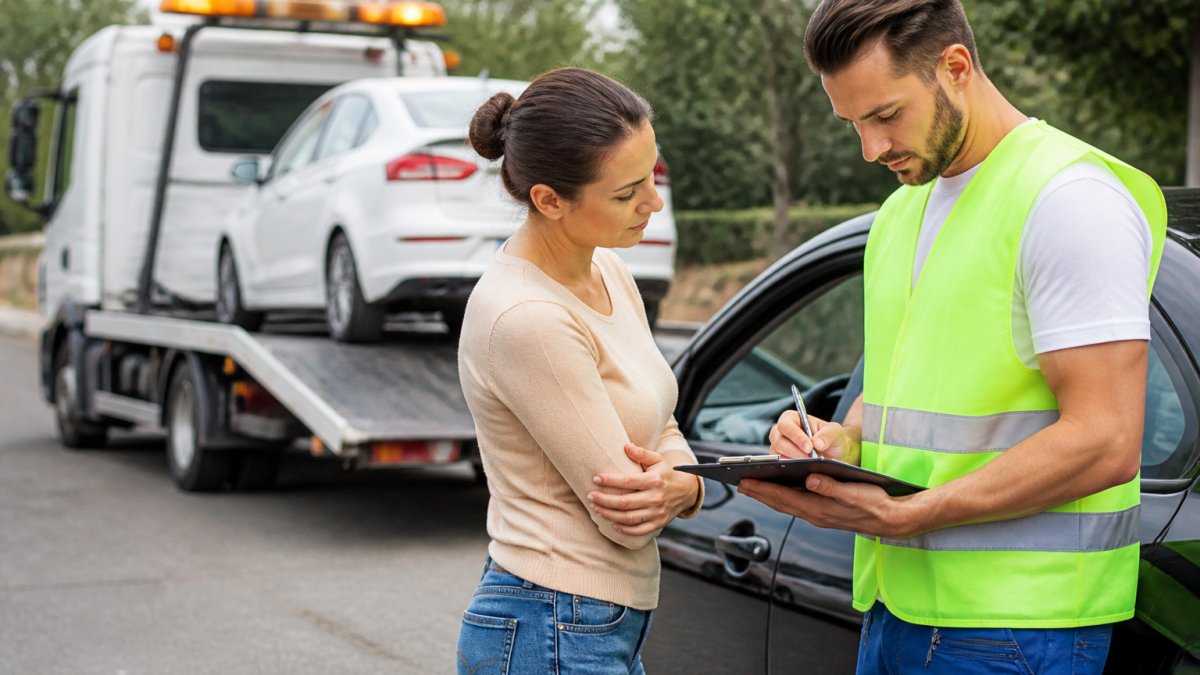
Ask for the all-in total, not a starting price. The most protective habit is to request the estimate by text or email so there's a record of what you were told. A company confident in its pricing will provide a line-by-line breakdown. One that dodges the question is telling you something.
Questions that surface hidden charges
"Is that the total, or does mileage get added on top?"
"Does the after-hours rate apply right now?"
"If the vehicle has to go to a yard, what's the daily storage charge?"
"Is there a winching fee if I'm off the shoulder?"
"What's the cancellation fee if I sort it out before you arrive?"
Payment methods and commercial accounts
Payment options vary by provider, so confirm before the truck arrives whether they take credit and debit cards, cash, or e-transfer.
If you run a business, a service van, a delivery vehicle, a small fleet, ask whether the provider offers invoicing or a commercial account.
Key Takeaway Confirm the total price, in writing, before you authorize the work. It's the single most protective habit you can build, and it's the difference between a fair bill and a dispute.
Safety Steps While You Wait for Emergency Roadside Help
Safety steps while you wait are the part most drivers skip, and they matter more than the tow itself. Your priority is visibility and distance: make yourself seen, and put space between you and moving traffic.

Follow this sequence while you wait:
Turn on hazard lights immediately
Move behind a guardrail or well off the shoulder
Set out a warning triangle if you have one
Stay in the vehicle only if it's safe and off the roadway
Keep your phone charged and stay reachable
Watch for the truck and confirm the driver's identity before unlocking
If you're on a busy stretch of highway, stay on the far side of the barrier rather than in the driver's seat. If it's dark or visibility is poor, keep a reflective item or your phone flashlight visible.
When the truck arrives, confirm the company name and the driver's identity before you hand over your keys. A real provider will expect that check and won't rush you through it.
A breakdown on the road is stressful enough without wondering whether help will actually arrive. The fix is having a local number you trust before you need it.
Frequently Asked Questions
What should I do first if my car breaks down in the Grimsby area?
Move as far off the road as possible, turn on your hazard lights, and stay inside if traffic is fast. Call a local provider like SJ's Towing with your exact location, vehicle make and model, and a description of the problem. If you are on a busy road, exit through the passenger side only when it is safe. Having your licence and insurance ready speeds up the paperwork when the truck arrives.
How long does emergency roadside help usually take to arrive?
Response time depends on traffic, weather, and how far the driver has to travel. In the Grimsby area, providers aim to arrive in a timely manner, but that can stretch during peak commuter hours on the QEW or in heavy snow. Ask the dispatcher for a realistic arrival window and a callback number so you are not left guessing.
Can roadside assistance help with a flat tire or dead battery?
Yes. Flat tire roadside assistance covers changing your tire with the spare. Dead battery roadside assistance includes a jump-start, and if the battery will not hold a charge, the provider can tow your vehicle to a garage of your choice.
How do I stay safe while waiting for a tow truck?
Stay in your vehicle with your seatbelt on if you are on a highway, and keep your hazard lights flashing. If you must exit, use the side away from traffic and stand behind a barrier. Avoid standing directly behind or in front of your car. Keep your phone charged, share your live location with a friend, and do not accept help from unmarked vehicles.
GET A QUOTE
Comments